
OUR TRAINING
Homonji Iaido is an ongoing, lifelong practice. We follow seven areas that help create a holistic way of learning traditional Japanese Sword arts. Each location, each class is focused on helping students to not only develop technique, but develop balance in their lives. Although training can be challenging, we also have fun while we practice. Our art is based on Koryu arts, and we blend traditional ways of practice with a modern adaptability that can be sustained in our current lives.
HOMONJI RULES AND SIGN UP
Our classes are weekly, and all students are required to attend at least one class per week to maintain training. Iaido is a martial art that requires constant attention and ongoing practice, and as such, students need to be able to dedicate themselves to regular practice.
We have a strict uniform policy that will be covered in class, and we will direct you where to purchase what you need.
All Iaito need to be unsharpened alloy, "shinken" or live blades are never allowed in classes, except for special events such as tameshigiri.
We follow traditional dojo etiquette, and all students should be familiar with and follow those aspects. If you are unsure, it is best to follow what other students do and ask any instructor for additional guidance.
Classes at the Honbu (Dharma Gate Zen) are currently $40 per month through 2026. You can sign up using the button below. It is best to reach out first to Hoden Sensei to schedule a time to visit a class prior to signing up.
For our other locations, please reach out to see what costs will apply and what procedure to follow.
The areas below are all part of Homonji classes, and each class may be a blend of any of the areas below.
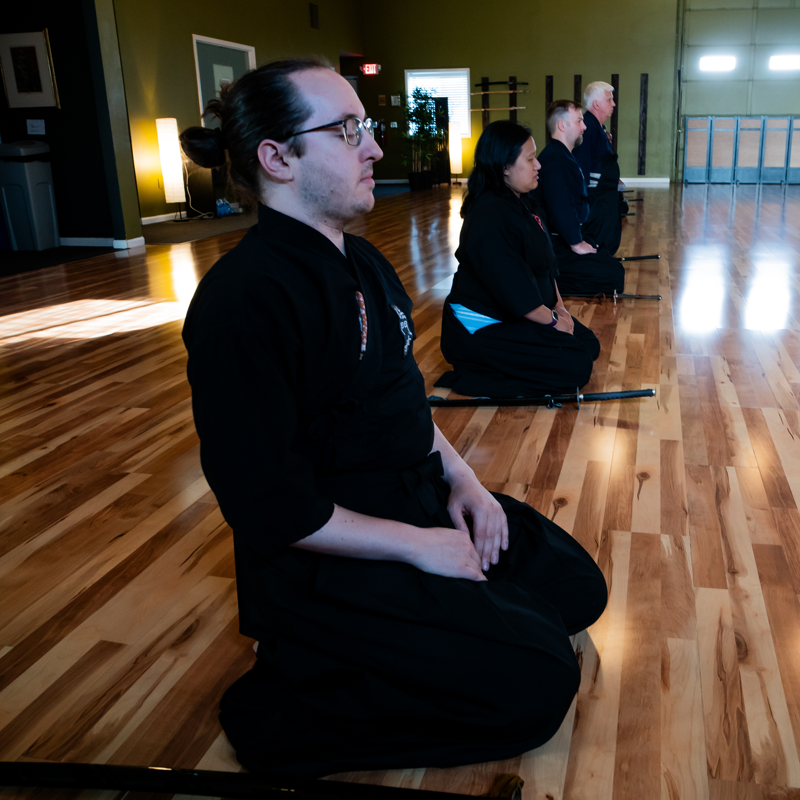
MOKUSO (黙想)
MEDITATION: We start each class with a short meditation, to provide time to clear our thoughts, leave our outside responsibilities and worries aside so we can concentrate and be focused on the instruction.
At the end of each class, before we head back to our lives, we also spend a short time to internalize the lessons covered over class time.

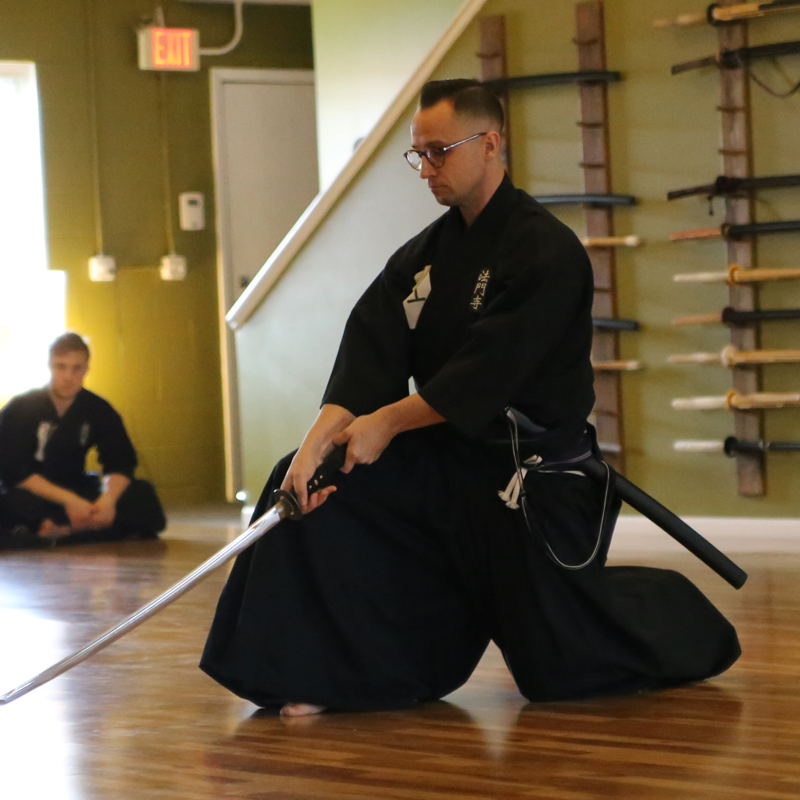
KATA (型 / 形)
FORMS: Our Kata are a detailed, choreographed sequence of movements that embodies specific situations, techniques, timing, and intent, practiced solo. These forms are created to teach our students the multitude of movements, and strategies involved in using the katana.
From opening movements, placement, distance and how to move freely from one technique to another, to finishing the engagement and removing safely from the encounter.
Through repetition of these techniques we internalize not just individual parts, but underlying principles. Over time the goal is not rigid imitation, but absorbing these principles so deeply that you can adapt them freely under pressure.
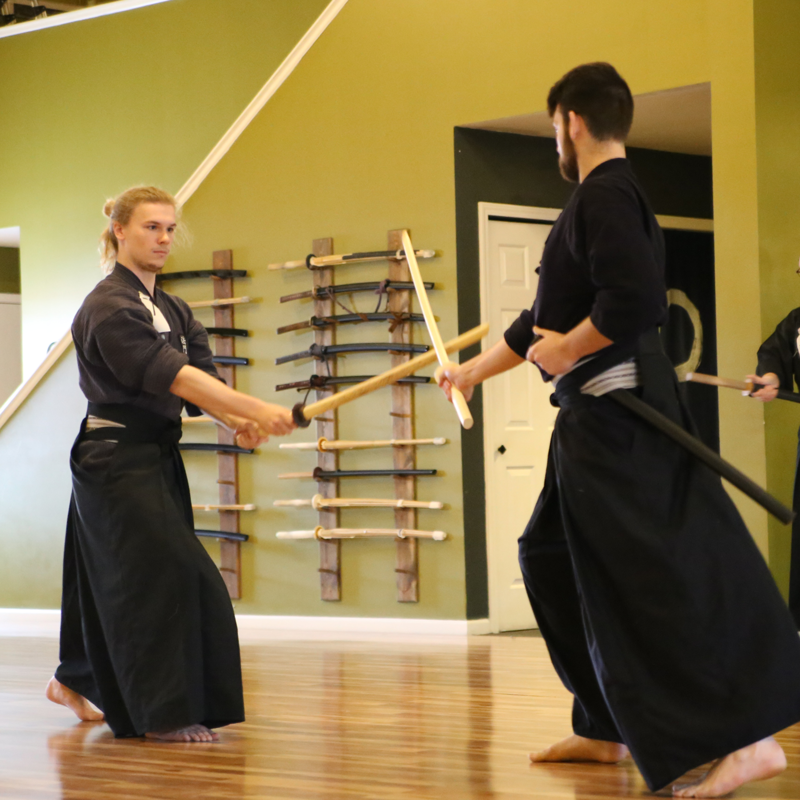
KUMITACHI (組太刀)
PAIRED FORMS: Our Kumitachi are pre‑arranged, paired sword kata in which two or more partners use choreographed attacks and responses to train timing, distance, strategy and control with live interaction.
Kumitachi practice allows us to move beyond just visualization of the opposing forces, but allows our students to experience interactions in real time, with actual opponents, showing us how our timing and distance (ma-ai) effect our technique.
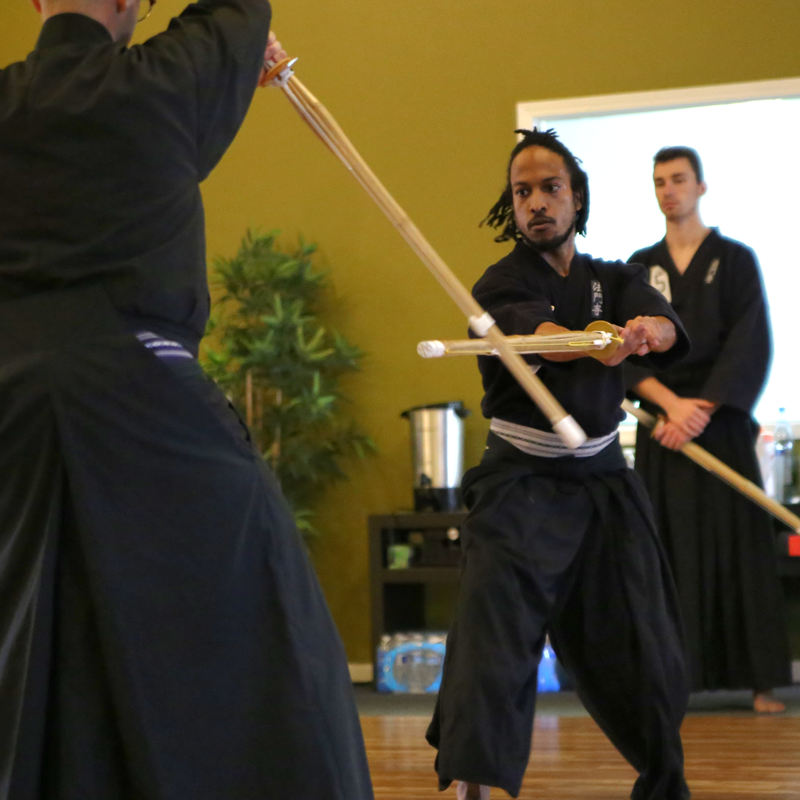
SHŪCHŪ RENSHŪ
(集中練習)
FOCUS EXERCISES: Our focus practice is both solo and with partner, using Shinai. It allows our students to learn timing and distance while safely striking and object.
Through these practices, we learn to strike with correct timing and stance, understand how to continue through a target and provides physical conditioning.
UGOKU MEISŌ
(動く瞑想)
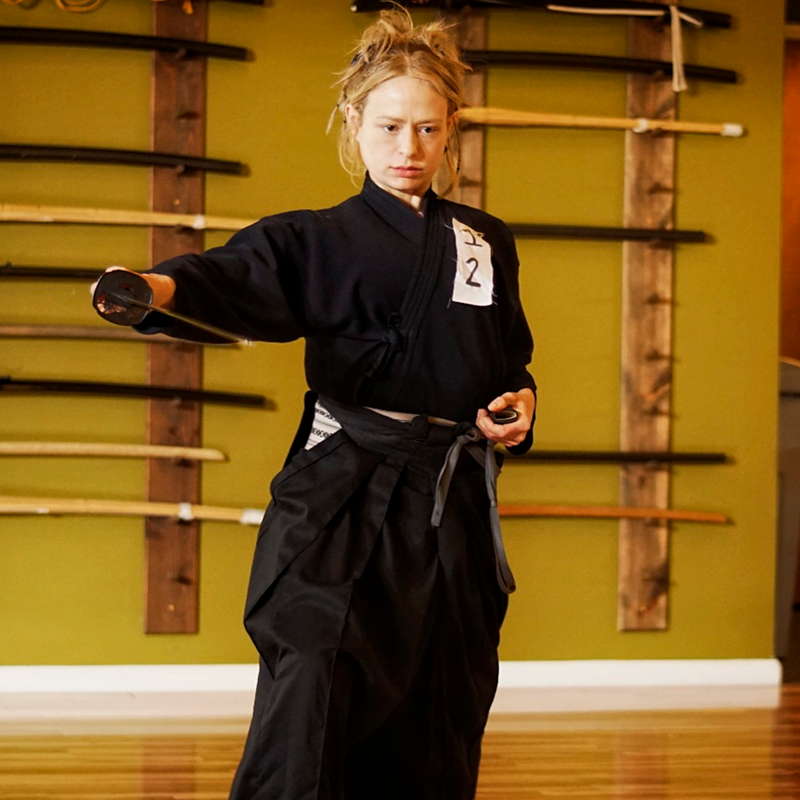
MINDFUL EXERCISES: Our practice is deeply rooted in Zen concepts of awareness, mindfulness and being fully present. Our mindful exercises were created to provide our students a slow, dynamic practice to train our mind, be present and calm, even in motion.
No enemies present, just slow continuous motion with complete concentration.
RANDORI (乱取り)
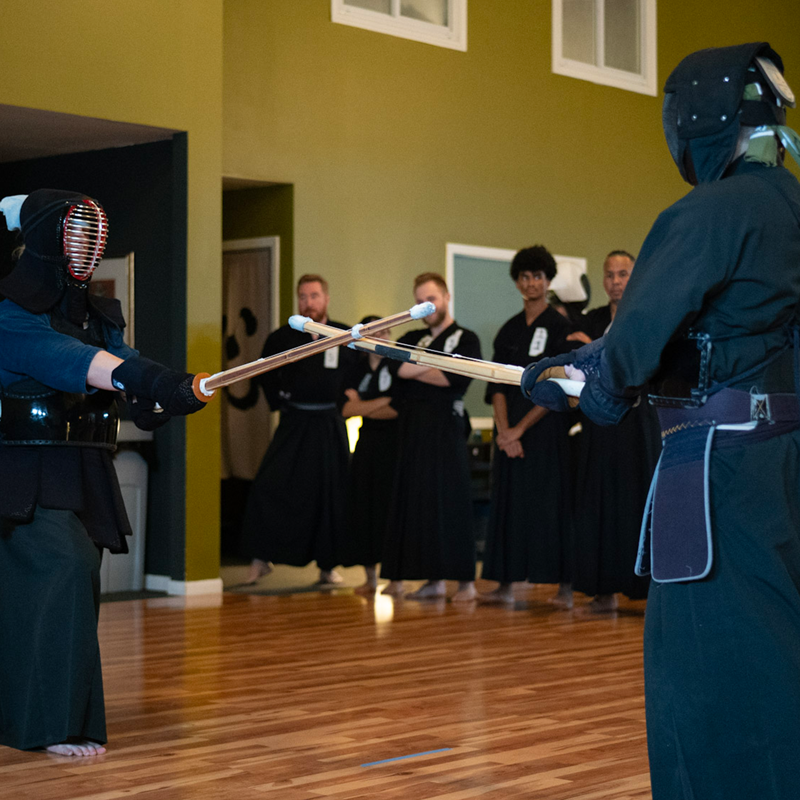
FREE PRACTICE: Randori literally means “to seize the chaos”, but in our practice it is training designed to allow two students to lightly spar without prearranged motion. Our randori is not like the Japanese sport of Kendo, it is instead practiced with the mind of real encounters, where students can learn to control breathing, striking, timing and distance.
This practice is only for students who have progressed enough to be able to control technique and is done safely with protective gear and Shinai only.
OUR METHODOLOGY
Our approach to teaching Iaido

FOUNDATIONAL PRACTICE
We focus on building from foundational practices to ensure students have a solid grasp on proper technique before moving into more complex forms.

SKILL PROGRESSION
Each student has the space to progress at their own pace. Our students come from all backgrounds and wide range of age. Allowing students to adapt over time, they can learn to practice for life.

LARGE GROUPS, SINGLE FOCUS
Our classes can have 12-20 people, yet each student has individual attention and focus. This allows for both training with many people of different skill levels, yet having direct instruction.

VARIED PRACTICE
Each class through the weeks and years change to cover all of our practices. Students start learning with students of all levels of experience, through kata, to kumitachi and more.
YEARLY EVENTS
KAGAMI BIRAKI
Our first class of the year is a time for us to start our training with energy and set the tone for the year. This class is fun and dynamic, as we attempt to do "1,000 cuts" before we end.

NATSU TAIKAI
Our summer taikai brings all of our groups together to train, practice, have fun and practice test cutting (tameshigiri).

SHINSAKAI
Once a year we gather to test how our student's training has progressed through the year. We hold a formal testing structure that allows student to show their performance.
