
Basic Iaito maintenance for students
Basic Iaito maintanence during Iaido practice is part of our way. The phrase Katana wa bushi no tamashii desu (“the katana is the soul of the samurai”) holds true to this day.
A modern iaitō is built to survive years of kata, noto, and general practice—but only if you treat it like a training partner, not a disposable prop. Proper iaito maintenance properly keeps your practice safe, protects your investment, and preserves the quiet dignity that belongs around any Japanese sword.
What makes a modern iaitō different?
Most modern iaitō used for iaido are made from aluminum‑zinc or similar alloys, often with a chrome or other plated finish. They are deliberately not sharpened and are designed to be rust‑resistant compared to carbon steel, but that does not mean maintenance is optional.
Key points to understand about your iaitō:
The blade: Usually an alloy that resists rust but can still stain, tarnish, or have its plating damaged by harsh chemicals, powder, or abrasives.
The fittings: Tsuba, fuchi, kashira, and seppa may be brass, iron, or alloy and can corrode over time if they stay damp or sweaty.
The tsuka: A wooden core with samegawa and tsuka-ito, which can loosen or deform under moisture, heat, or rough handling.
The saya: Lacquered wood that can crack, warp, or lose its sheen if exposed to heat, direct sunlight, or impact.
Because of the alloy blade, iaitō care is slightly simpler than caring for a shinken—but it still requires regular attention and a gentle hand.
Daily and post‑practice care
The simplest care is also the most important: what you do every time you finish keiko. Making this a small ritual is good both for your sword and for your mindset.
After each training session:
Wipe the blade: Use a soft cloth like your tenugui or the washi (paper) that came wih your cleaning kit, to remove sweat, dust, and fingerprints. Always wipe in one direction, from the tsuba towards the tip, with the ha facing away from you.
Check for moisture: If the blade or saya feels damp (sweat, humidity), dry them carefully before storage. Alloy won’t rust easily, but moisture can damage fittings and the inside of the saya.
Light oil if needed: A very thin film of choji oil can make noto smoother and protect fittings, but avoid coating an alloy blade heavily.
Manufacturers like Tozando stress that unlike shinken, an alloy iaitō does not need generous oiling; too much oil just soaks the wood of the saya and attracts dust. A tiny amount of oil occasionally, focusing on the mune or spine that contacts the koiguchi during noto is enough.
Deeper cleaning and what to avoid
From time to time, especially if your iaitō looks visibly dirty or dull, you may want to clean more thoroughly. This is where it’s vital to distinguish between proper care for an iaitō and traditional care for a polished steel katana.
Safe deeper cleaning steps:
Alcohol wipe: For a heavily used blade, wiping the blade with a soft cloth lightly dampened with ethanol or anhydrous alcohol to remove oils and grime should be safe.
Re‑oiling: After cleaning, apply a very thin layer of choji or light sword oil with a separate soft cloth. You only need enough to leave a faint sheen, not visible droplets.
Guard and fittings: Wipe the tsuba and metal fittings gently with a dry or very lightly oiled cloth to prevent rust where your hands don’t regularly touch.
Things you should not do with a modern alloy iaitō:
Don’t use uchiko powder on plated alloy blades. Traditional polishing powder can scratch the surface and cause the plating to peel. Since alloy will not rust, powder has no use on iaito.
Don’t use abrasive cleaners, scouring pads, or harsh chemicals. These can strip the finish, leaving the blade patchy or rough.
Don’t expose the sword or saya to water for any reason. Prolonged moisture can damage the wooden core, tsuka, and interior of the saya, even if the blade itself doesn’t rust.
Caring for tsuka and saya
Because iaido involves repeated drawing and sheathing, the condition of the tsuka and saya is just as important as the condition of the blade. A loose tsuka or damaged koiguchi is a safety risk.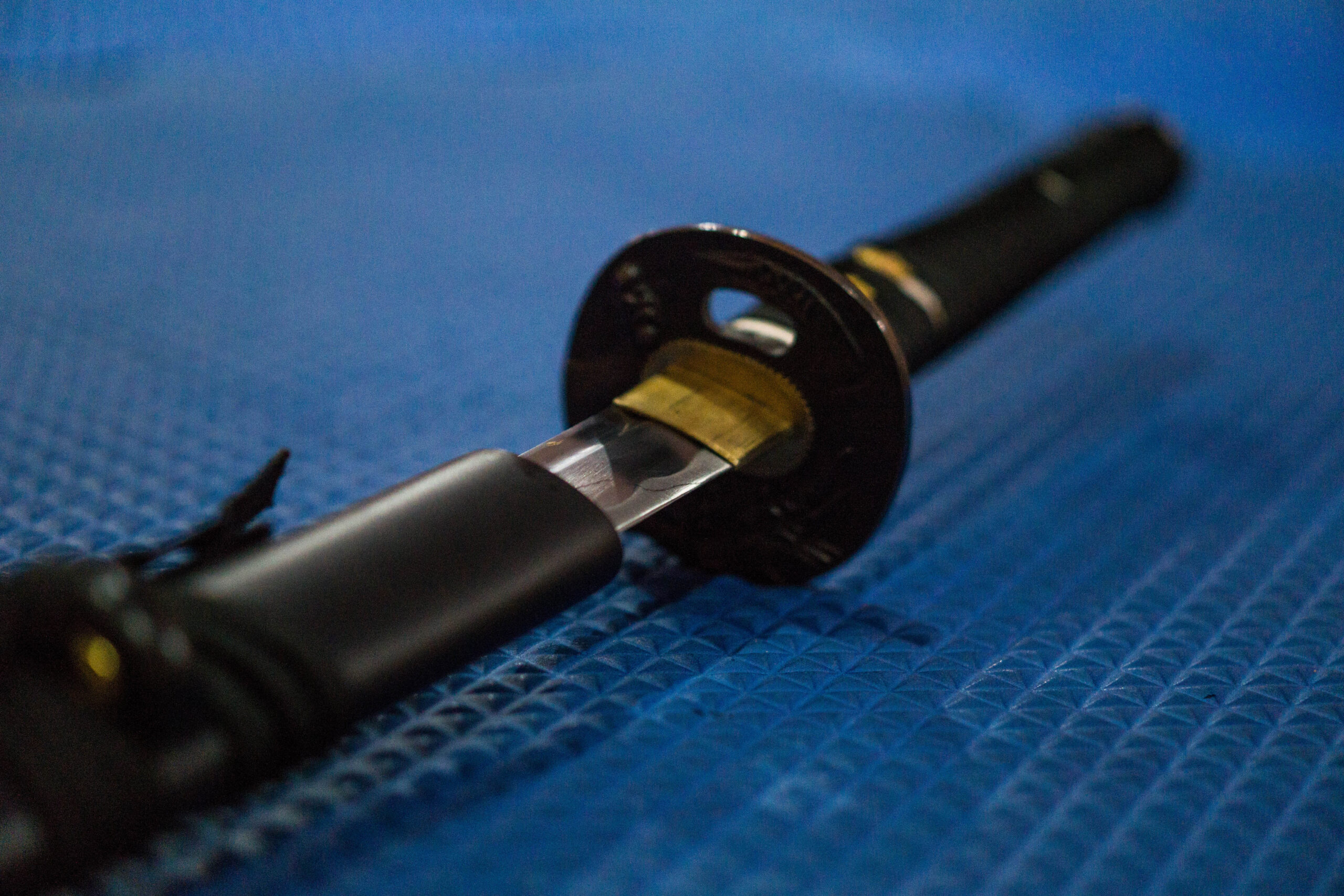
For the tsuka:
Keep the ito clean and dry. Wipe sweat away with a dry cloth after practice; avoid soaking it and if you clean it, do so gently with a slightly damp rag, avoiding “scrubbing” at any built up dirt.
Don’t pick at frayed ito or try to “re‑tighten” it yourself with pliers or improvised tools. If the wrap loosens, consult your teacher on how to properly fix the issue.
Avoid prolonged exposure to high heat (car trunks, heaters, direct summer sun), which can loosen glue and warp wood.
For the saya:
Wipe the lacquered surface occasionally with a very soft cloth to remove fingerprints and preserve the gloss.
Handle the saya carefully at all times. Any impact can scratch or dent the saya. If you wear jewelry (like a wedding ring) handling the saya can lead to fine scratches over time.
Don’t leave your iaitō in hot cars, near radiators, or in direct sunlight; temperature swings and heat can warp the wood or crack the lacquer.
If you notice a crack in the koiguchi, a loose fit, or any feeling that the blade might not stay securely in the saya during movement, stop using the sword and have it inspected by the instructor.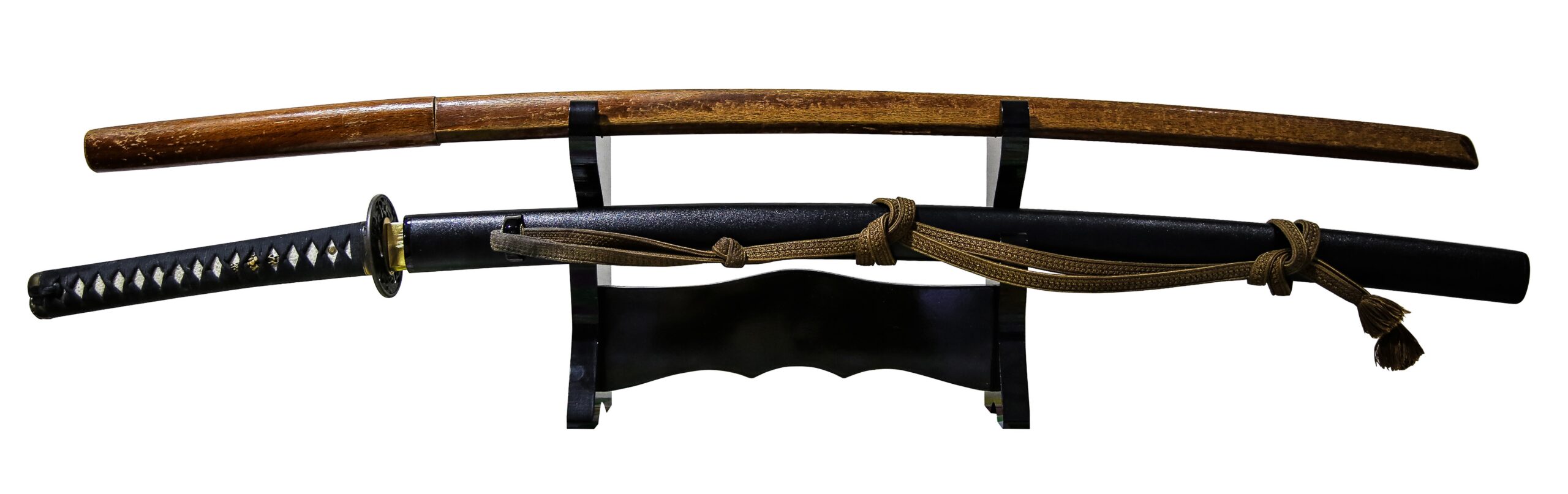
Storage, transport, and long‑term care
How you store and move your iaitō between practices matters just as much as how you clean it.
Good habits include:
Store horizontally or in a proper stand, in the saya, in a dry room away from direct sun and high humidity. Blade edge should be up, and be careful of leaving the sageo too tight for any prolonged period. You can also leave your iaito in the thin bag that came with your purchase.
Avoid closets, basements, or garages prone to moisture. Even alloy blades have steel fittings that can corrode, and wood can absorb damp.
Use a sword bag when transporting to and from the dōjō to protect the Iaito from rolling around or getting damaged. It is also extremely important that you transport your Iaito in the trunk or back of your car, out of reach from the driver’s seat. If your Iaito is “lock-wrapped”, in a thin sword bag, placed in a larger more protective bag, it will be safe. Even though iaito are not technically “weapons” they can be misunderstood by police if you are ever pulled over. If they are completely away from you in the trunk, it will not be considered a “concealed weapon” and it is good to let any law enforcement officer know of it’s existence (and explain what it is and what it is for) if you are stopped.
For long‑term storage (for example, if you are injured or pausing training), a very light coat of oil on the blade and a dry, stable environment are usually enough. Check the sword every month or two for any signs of condensation, mold on the tsuka, or corrosion on fittings.
When not to DIY
It can be tempting, especially if you are handy, to take the iaitō apart to “check inside” or to try home repairs. Most reputable manufacturers caution against disassembly unless you genuinely know what you are doing or have been taught by a knowledgeable instructor.
The mekugi holds the tang in the tsuka; damaging it or hammering incorrectly can compromise safety.
Reassembling the tsuka, seppa, tsuba, and habaki incorrectly can change the fit, affect noto, or even let the blade shift unexpectedly.
Advanced repairs, re‑wrapping, or structural fixes are best left to craftsmen or specialized vendors.
If your iaitō develops serious problems—deep damage, warped saya, loose core, or anything that makes it feel unsafe—retiring the sword or sending it to a professional is far better than trying to nurse it along with improvised fixes.
If you bring a new iaitō to class for the first time, it needs to be inspected by the instructor prior to class use.
In Homonji Iaido, we typically only use alloy blades. We do allow stainless steel, due to the cost of alloy blades, but even those need to be unsharpened and inspected prior to use.
Care as part of keiko
Finally, caring for your modern iaitō is not just about preserving metal and lacquer; it is part of your training in our way.
Wiping the blade after each class, checking the koiguchi before you draw, and storing the sword mindfully are all small acts that reinforce seriousness and gratitude for the tool that allows you to walk the path of Iaido. Over years, those habits matter as much as technique.
Treat your iaitō with the same calm attention you bring to your cuts, and it will serve you well—quietly, reliably, and safely—for countless hours of practice.